

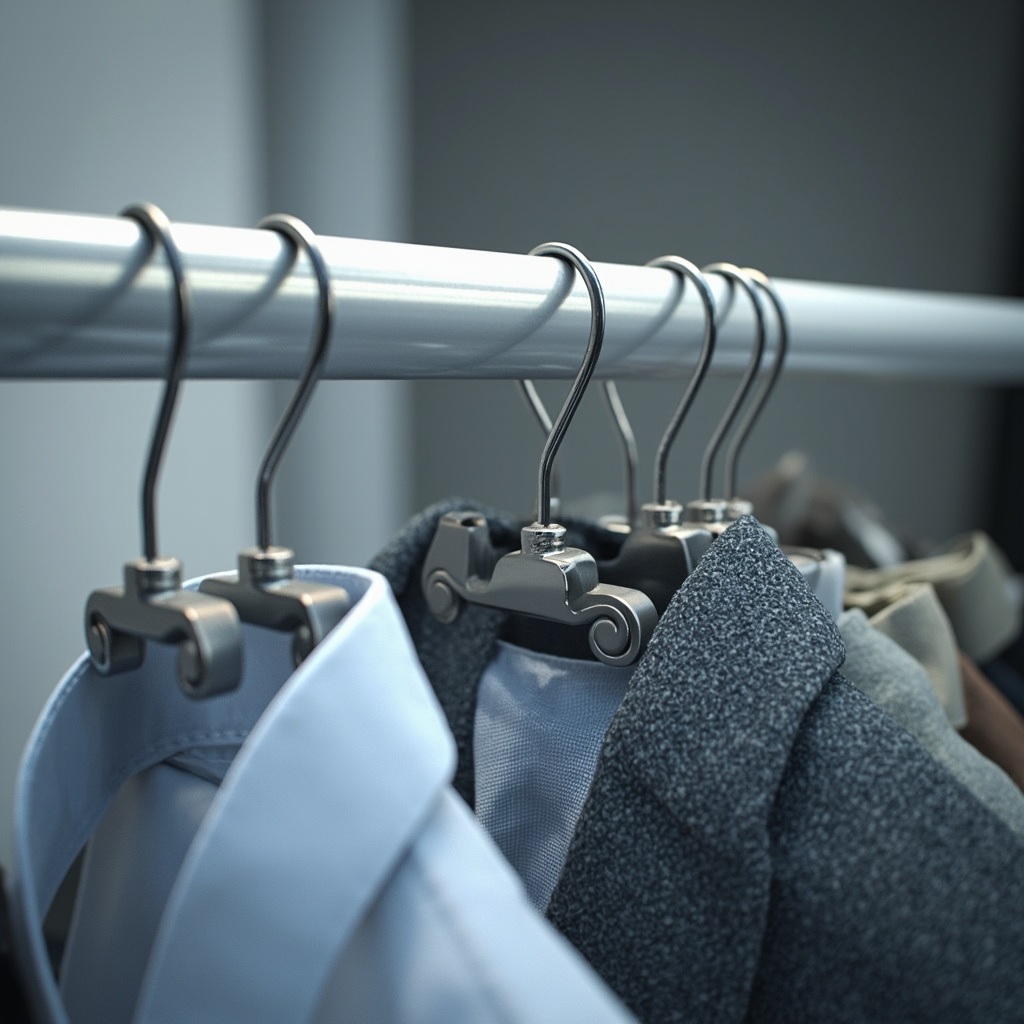
 A clothesline snapping mid-swing, a heavy wet sheet crashing into the dirt, and your carefully planned laundry day turning into a muddy mess. That’s not just an inconvenience. That’s a failure of engineering. And the culprit is almost never the line itself. It’s the anchor. If you’ve ever installed a retractable Aluminum Alloy Clothes Drying clothesline and watched it sag, wobble, or rip clean out of the wall after a few uses, you already know the pain. The real question is: why do some systems hold firm while others give up after one windy afternoon?
The answer lives in a single metric most shoppers ignore: anchor pull-out strength.
Let’s be brutally honest. A retractable clothesline is only as good as the tiny piece of hardware holding it to your brick, concrete, or wooden frame. You can buy the sleekest aluminum casing on the market, the smoothest retraction mechanism, and the most UV-resistant cord, but if the anchor lets go, you’ve got an expensive piece of scrap metal. The industry has quietly known this for years, yet most marketing focuses on the shiny reel and forgets the silent workhorse that keeps everything upright.
Here’s what separates a premium system from a frustrating one. High-quality retractable aluminum clotheslines use expansion anchors or heavy-duty screw anchors specifically designed for the substrate they’re mounted on. Not a generic plastic wall plug. Not a flimsy nail. We’re talking about zinc-alloy or stainless steel anchors with deep threading and a conical expansion design. When you torque that screw down, the anchor expands laterally inside the wall material, creating a mechanical lock that resists both straight pull-out and rotational shear. That dual-axis resistance is critical because a clothesline doesn’t just pull straight down. It sways. It jerks. It whips in the wind. A weak anchor fails under that chaotic load.
Think about the physics for a second. A full load of wet jeans and towels can easily weigh fifteen to twenty pounds. When that load swings, the instantaneous force at the anchor point can spike to over fifty pounds. Now multiply that by hundreds of cycles over a year. A cheap anchor will slowly fatigue. The hole widens. The plastic crumbles. One day, you hear a crack, and your line is lying on the ground. A properly engineered anchor, on the other hand, actually gets tighter over time as the expansion mechanism beds into the material. That’s the difference between a product you install once and forget, and one you curse at every weekend.
But here’s the kicker that most retailers won’t tell you. Anchor pull-out strength isn’t just about the anchor itself. It’s about the matching between the anchor and the clothesline’s tension system. Some retractable aluminum lines use a spring-loaded retraction that creates constant tension on the cord. That tension, while convenient, also applies a continuous static load to the anchor. If the anchor is rated for dynamic impact but not sustained static pull, it will eventually creep out of the hole. The best systems on the market now use a dual-stage tension mechanism: a high initial tension for retraction, but a lower sustained tension once the line is locked in place. This dramatically reduces the long-term stress on the anchor without sacrificing usability.
Let’s talk installation reality. You can have the world’s strongest anchor, but if you drill a hole that’s two millimeters too wide, you’ve already lost. That’s why the smartest manufacturers now include a drill bit guide and a depth stop collar right in the packaging. They know that even experienced DIYers eyeball the depth. A depth stop ensures the hole is exactly as deep as the anchor’s expansion zone. Too shallow, and the anchor won’t expand fully. Too deep, and the anchor sits loose in a cavity. Precision here isn’t a luxury. It’s the difference between a clothesline that holds for a decade and one that fails in a month.
Now, if you’re mounting on brick or concrete, you need a different animal entirely. Standard plastic anchors will strip out the moment you load them. You want a wedge anchor or a sleeve anchor made of hardened steel. These bite into the masonry with a ferocity that plastic can’t match. And for aluminum siding? You need a toggle bolt or a molly bolt with a wide flange that distributes the load across the thin metal. One size does not fit all. A truly premium retractable clothesline system doesn’t just sell you the line. It sells you the right anchor kit for your specific wall type. That’s the mark of a company that understands the real-world pain points.
Let’s cut through the noise. When you see a retractable aluminum clothesline advertised with phrases like “heavy-duty” or “industrial strength,” ask one question: what is the rated pull-out strength of the included anchors? If they can’t give you a number in pounds or kilonewtons, they’re hiding something. A legitimate product will have test data. They’ll tell you it holds 120 pounds in solid concrete or 80 pounds in brick. They’ll specify the torque required for installation. That’s transparency. That’s confidence.
The bottom line is simple. You don’t buy a clothesline. You buy a system. And the anchor is the foundation of that system. Ignore it at your own risk. Choose a retractable aluminum clothesline that treats anchor pull-out strength as a headline feature, not a footnote. Your laundry, your wall, and your sanity will thank you.